

- Cet évènement est passé
Sticky and Slippery Surfaces: From Sample Preparation to Developing “Maps” for Surgeons
12 septembre 2019 @ 12:00 - 13:00 EDT
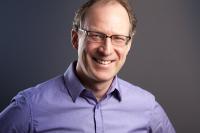
Pause-conférence | Pr Richard Oleschuk (Kingston)
Le Pr Richard Oleschuk, professeur à la Queen’s university à Kingston, sera l’invité de la Pre Lekha Sleno, membre régulière du CERMO-FC, le Jeudi 12 septembre à 12h00 au campus des sciences de l’UQAM (salle à venir).
En savoir plus sur les recherches du Pr Oleschuk (anglais).
Pr Richard Oleschuk, a professor at the Queen’s university at Kinsgton, will be the guest of Pre Lekha Sleno, a regular member of CERMO-FC, on Thursday, September 12 at 12:00 in UQAM sciences campus of UQAM (the local will be communicated soon).
Learn more about Professor Oleschuk’s research.

Abstract:
Both chemical composition and surface structure can influence how a fluid interacts with a surface. Through fluid contact and sliding angle surfaces can be classified as hydrophilic, hydrophobic, superhydrophobic or oleophobic. Our laboratory employs biomimetic and nanoparticle based coatings combined microfabrication methods (e.g. 3-D printing, laser micromachining and plasma exposure) to produce surfaces patterned with different fluid wetting properties. The slippery and sticky surfaces find significant utility in sample preparation and analysis using droplet-based microfluidics and mass spectrometry approaches.
Biography:
Richard Oleschuk obtained his Hon. B.Sc. (1994) and Ph.D. (1998) from the Department of Chemistry at the University of Manitoba. His doctoral studies with Arthur Chow, involved researching both polymer based extraction methods for metal complexes and membrane sample preparation methods for mass spectrometry. In 1998, Richard was awarded a NSERC Post Doctoral Fellowship, which he tenured in D. J. Harrison’s laboratory at the University of Alberta. His post-doctoral work involved developing miniaturized analysis devices, incorporating solid phase extraction and electrochromatography into lab-on-a-chip devices as well as utilizing mass spectrometry as a detector for microfluidic analysis. His work on the utilization of bead-based reagents in microfluidic systems (cited more than 450 times) generated significant interest from both the academic and industrial sectors and patents stemming from that work are currently licensed by Integenx in Dublin, California. Richard arrived at Queen’s in July 2000 where he established a state-of-the-art analytical laboratory and commands what is likely one of the leading microscale separation science research laboratories in Canada. Richard is now described as a top level, internationally recognized scientist in the areas of analytical chemistry, microfluidics and mass spectrometry and has been the recipient of research awards such as Premier’s Research Excellence Award 2002, Fred Beamish Award 2005 and Queen’s University Chancellor’s Award in 2006 and teaching awards (Department of Chemistry Graduating Class Teaching Award, won 7 times!, and nominated for the TVOntario Best Lecturer Award 2009, Alumni Award 2015, W.J. Barnes Teaching Award 2016 and the Frank Knox Award for Excellence in Teaching). In 2006 Richard was promoted to Associate Professor and full professor in 2011. Richard has carried out two sabbatical visits where he spent four months at Lund University, Lund, Sweden in Dr. Thomas Laurell and Johan Nilsson’s Laboratory. Following in 2015 Richard spent 2 months in Dr. Sabeth Verpoorte’s laboratory, Pharmacy Department, Groningen University, The Netherlands, where he utilized 3-D printing and superhydrophobic surfaces to rapidly prototype digital (droplet-based) microfluidic devices. In 2015 Dr. Oleschuk was also invited as a Distinguished Visiting Lecturer and made an Honorary Adjunct Professor Professor at Xi’an Jiaotong University. Richard’s work has led to 92 (2019) peer reviewed publications (two articles currently under review or in press), and 8 patents (applied for and granted). Three of his publications have been selected for covers Analyst 2012, Journal of Materials Chemistry, 2012 and Canadian Journal of Chemistry, 2008. As of February 2018 Richard has an H index of 32 and has been receiving an average of 295 citations/ year since 2012. Some of his papers have been cited more than 300 times and his total citation count now exceeds 4700. Richard’s research program has shown great commercialization potential and generated significant industrial interest. His technology surrounding the use of microstructured fibers for multi-nanoelectrospray was recently licensed by Trajan Scientific and Medical (Australia). The fact that many of the research projects that are funded are collaborative- either with colleagues at Queen’s or with researchers at other universities –highlights the ease with which Dr. Oleschuk works with others and how his research compliments existing research programs. Dr. Oleschuk has been a strong proponent of micro and nanofabrication facilities development at Queen’s. He was co-PI on a pan Canadian CFI project ($55 Million) entitled “Embedded Systems Canada” headed by Queen’s University and CMC Microsystems. Part of that project involved the establishment of four rapid prototyping microsystems laboratories across the country one of which is located at Queen’s University (NanoFab Kingston) which opened in April 2015 at Innovation Park. Dr. Oleschuk helped leverage the CFI funding with institutional and corporate support to design and construct the new rapid prototyping and materials characterization facility. Dr. Oleschuk currently chairs the scientific management committee of the facility. Dr. Oleschuk is co-PI that on a recent CFI project entitled “Molecular Approach to Surface Functionalization: From Automotive to Biomedical Applications, (8.5 Million)” and a state of the art imaging MALDI-MS has recently been installed in his laboratory.

Un évènement organisé dans le cadre des Pause-conférences du CERMO-FC et soutenu par :
An event organized as part of the Pause-conférences of CERMO-FC, and support by :

